

In the world of nutraceuticals and dietary supplements, tablets and capsules are two of the most common and widely used forms of supplements. In this blog, we’ll explore the process of tablet and capsule manufacturing, shedding light on the steps involved, the challenges faced, and the innovations driving the industry forward.
Understanding Tablets and Capsules: Basics and Differences
Before diving into the manufacturing process, it’s essential to understand the differences between tablets and capsules:
- Tablets: These are solid doses of supplements compressed into a specific shape. They can be coated or uncoated, and the coating can serve various purposes such as taste masking or controlled release.
- Capsules: These consist of a gelatin or vegetarian-based shell filled with powder, granules, or liquid. Capsules can be hard or soft, depending on their intended use and release characteristics.
The Tablet Manufacturing Process: Precision in Every Step
The process of manufacturing tablets involves several key steps:
- Formulation: The first step is to develop the formulation of the tablet. This includes selecting vitamin, mineral and/or botanical ingredients and excipients (inactive ingredients) that aid in the tablet’s stability, absorption, and manufacturability. The formulation must be carefully designed to ensure that the tablet delivers the correct dosage and performs its intended function.
- Mixing: The ingredients are blended to achieve a uniform mixture.
- Granulation (Optional): The mixed powder may then be granulated to improve its flow properties and compressibility. This can be done through wet granulation (using a liquid binder) or dry granulation (compressing the powder into granules without liquid).
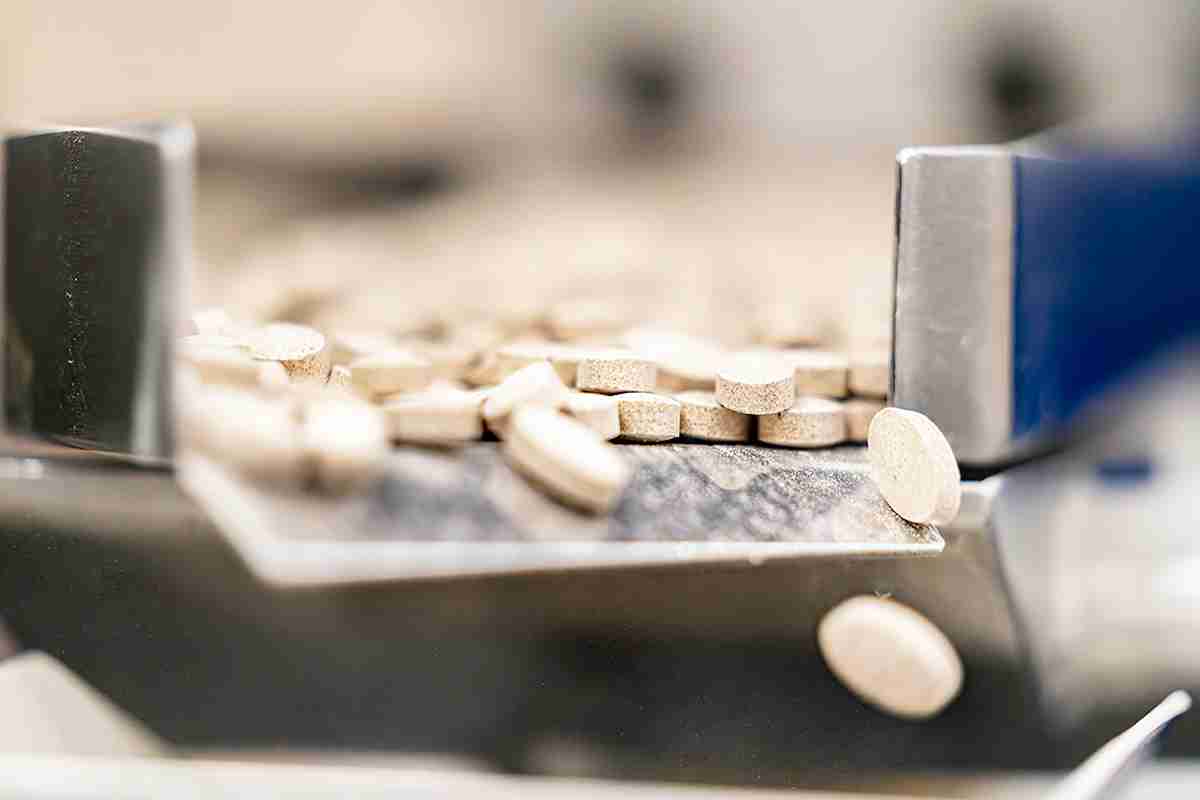
- Compression: The granulated mixture is compressed into tablet form using a tablet press. This process involves applying high pressure to mold the mixture into tablets of specific shapes and sizes.
- Coating (Optional): Tablets may undergo a coating process for various reasons, such as protecting the tablet from environmental factors, masking taste, or controlling the release of the ingredients. Coatings can be sugar-based, film-based, or enteric, depending on the desired effect.
- Quality Control: Each batch of tablets is subjected to rigorous quality control tests to ensure they meet the required standards and overall quality. This includes checking for uniformity in size, weight, and appearance.
The Capsule Manufacturing Process: Precision and Flexibility
Capsule manufacturing is a bit different from tablet production, with its own set of procedures:
- Formulation: Similar to tablets, the formulation of capsules involves selecting the ingredients and excipients. The choice of excipients can affect the capsule’s release characteristics and stability.
- Filling: Capsules are filled with the prepared powder, granules, or liquid. For hard capsules, the filling process involves using automated machinery to accurately dose the content into each capsule shell. Soft capsules, on the other hand, are filled with a liquid or gel-like substance.
- Sealing (for Soft Capsules): Soft capsules are sealed after filling to prevent leakage and maintain integrity. This is done through heat sealing or other methods.
- Quality Control: Capsules undergo similar quality control procedures as tablets. This may include testing for content uniformity, dissolution rates, and overall integrity. Capsules are also checked for weight and appearance.
Challenges in Tablet and Capsule Manufacturing
Manufacturing tablets and capsules involves overcoming several challenges:
- Consistency and Quality: Ensuring consistent quality and dosage across all units is crucial.
- Stability: Both tablets and capsules must be stable over their intended shelf life. This involves considering factors such as humidity, temperature, and light exposure.
- Compliance: The manufacturing process must comply with regulatory standards to ensure safety and quality.
- Innovation: Developing new formulations and to improve products and options for consumers.
Crafting Precision and Efficacy
Tablet and capsule manufacturing may seem straightforward, but it involves a highly optimised process that ensures the safety and quality of the final product. From formulation to quality control, every step is managed to deliver effective and reliable supplements. As the industry continues to advance, innovations and improvements will further enhance the ways in which we deliver and consume health supplements, promising even better outcomes for consumers.


